Tuesday, May 19, 2015

Final Project Post


5 REASONS LORD OF THE RINGS IS SO POPULAR

People whisper of the battles from Lord of the Rings in hushed voices of awe and wear homemade t-shirts and jewelry adorned with quotes and pictures form the series. Why is there such a hype with these four books? What makes them different from any other series? Well, I will tell you. It may be the simplest good against evil scenario, but it is a 100 times more complicated than that. The stories, the people, and the events that weave themselves through the book truly creates the phenomenon of the Lord of the Rings.

1.      The hero (Frodo) isn’t always the hero.

Frodo is severely flawed. He can’t resist the Ring, he throws himself into danger needlessly, and he wouldn’t have survived without Sam or the others. Yet he is still the hero. He takes the weight of the world, literally, and sacrifices himself for the welfare of the others. Yet the book acknowledges that someone can’t be the hero 100% of the time. For example, when Sam took the Ring and became the hero because “a new strength grew in him… and found that he could… bear his burden.” (387).

2.      The type of magical creatures are outstanding!

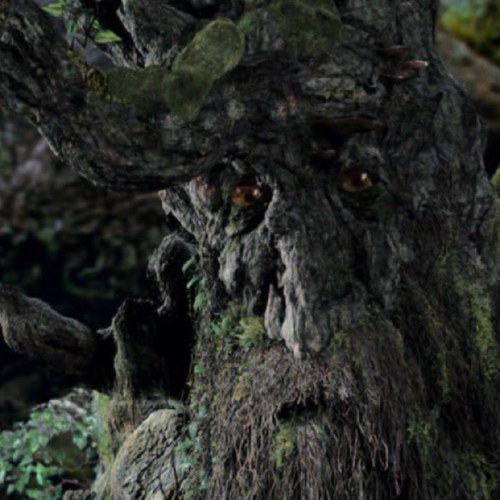
From elves to hobbits, the creatures in the book capture the imagination of many. They have complicated values and social standings. And J.R.R. Tolkein manages to make them connect to average people and the struggles they go through. My absolute favorites would be the Ents. Treebeard discusses the pain of his people over the loss of the Entwives and how his race is dying out. He tells of the love for his job and his love for nature. And though these may seem like simple things, the Ents capture the imagination and make you smile and laugh and look at trees in a whole other light. All the differing creatures make the book the series that have been talked about for generations.
 

  3.    The problems in the book relate to everyday problems.

Even though the book is filled with magic and evil tyrants and powerful Rings and armies of the dead, it still manages to connect itself with our world. It talks about oppression and its effect on people like in middle world countries today. It also talks about deforestation and its effect on the surrounding wildlife. “Down on the borders they are felling trees—good trees. Some of the trees they just cut down and leave to rot” (76). Because of the Ents deep connection to the forest it allows readers to see deforestation in a whole new light. Allows the reader to connect more to the story.

4.      The friendships made are inspiring.

Nine people are thrown together onto a quest and the bonds they create defy the evil they face. Legolas and Gimli, though their races don’t like each other, overcome their differences and create a very strong and very funny relationship. The hobbits depend upon Aragorn and Boromir and they love the “little ones”. These friendships in the face of eminent doom provides hope and happiness and makes the readers want to see them through it all.


 5.      The evil, though infamous, can be stopped because the readers believe in the heroes.

Sauron is ancient and powerful and has caused many hardships throughout the land. He has thousands of followers and magic to boot. Yet even though he seems unstoppable, J.R.R. Tolkein is able to make us connect and believe full-heartedly in his characters. He makes us want to see them through to the very end. He gives the characters flaws and the enemy none, yet even so, the readers believe the heroes can kick his all-powerful butt. He makes the readers love them and they don’t mind. “War must be, while we defend our lives against a destroyer who would devour all; but I do not love the bright sword for its sharpness, nor the arrow for its swiftness, nor the warrior for his glory. I love only that which they defend” (314).


These are the reasons Lord of the Rings is so popular. It isn’t about the fight of good against evil, though it does play a role in it; it is the fact that this magical world is able to be applied to everyday life as well and the adventurer and dreamer within us all. Lord of the Rings will survive for centuries to come, and then some.

Thursday, April 30, 2015

Post 6: Listicle


5 REASONS DINAH FROM THE RED TENT BOUNCES BACK FROM EVERYTHING

Dinah, the protagonist in The Red Tent by Anita Diamant, seems to have every wrecking ball thrown at her, from her brothers killing her husband to losing her son. Yet even though there is so much loss around her, she seems able to find the light in everything that happens to her. Proving that she has steel bones and an iron mind.

1.      Her husband dies, yet she finds happiness.

In most movies, when a loved one dies, the person goes through a bout of depression. Especially if their own brothers killed them.Yet in Dinah’s case she moves to Egypt and falls in love with the new country and bonds with her late husband’s mother and the baby growing in her womb. And when her son was born she rejoiced, saying “there should be a song for women to sing…a prayer to recite… no words strong enough to name that moment” (282). This shows that she found solace in the face of her husband’s death.

2.      Her son moves away and she moves on as well.

Dinah was devastated when her son was accepted to a school a long way from home and that she would not see him for many years. She then left her home and found a job she loved: as a midwife; as her mothers were. She welcomed babies into the world and said goodbye to her own. Dinah takes every single bad thing and spins it into a whole new light.


3.  She falls in love again.

Even though she thought she could never love again, she met Benia and fell in love. And though she had lost everyone, her family, her husband, and her son; she was still willing to accept new people into her life. “We stood… hand in hand and smiling like fools without speaking,” (338). She learned from every loss she had and taught herself to hold onto good things and good people while she still had them. She cherished every moment.

4.      Her brother threatened her son and she took it all in stride.

She reconnects with her son, yet his life is then threatened by her brother who she thought was dead. Her son, Re-Mose, confronted her brother, Joseph, about his father's death; and Joseph responds by condemning Re-Mose. Dinah realizes the brother she had as a little girl was gone and that he was a different man. She deals with this theoretical loss and convinces her brother to save the son who then hated her.

 
5.      She confronts her family who killed her husband and who she abandoned.

Joseph took Dinah back to her family and she confronts the people who she cursed and left behind. She also learned the fate of the mothers she loved and the brothers she looked up to. Even though she swore never to see them again, she said goodbye to her dying father, met her new family, and found consolation with her mothers who had died. Being there “had given me [Dinah] peace… as long as the memory of Jacob lived, my name would be remembered” (397). She took the bad things in her life and learned from them. She found happiness from them.

This is important because it shows that people need to take everything in stride and that no matter what happens to you, it isn’t the end of the world. It gives hope that everything will be ok in the end.

Monday, April 20, 2015

Post 5

In my opinion, to be non-fiction, a book needs to be 100% true. But my view of what is considered non-fiction is a slim margin. Non-fiction, to me, are books that cover events in history or animals or plants or any factual thing that can be researched and backed up. Memoirs do not fall into that category. To me, memoirs are just another novel, just another story. If it actually happened, that's great and it can be truly inspiring. But so can fictional stories. And if there are falsehoods found in memoirs, so what? I mean, what did you expect? Like Seth Greenland said, memory is fallible, you cannot remember every single things exactly as it happened. And in my opinion, our lives are fictional because we view them in different ways (like Laila Lalami discussed) and we all like to believe/interpret events in the way we want to. We are all authors in this way. So I believe it is ok for "memoirs" to be half-truths as in Frey's case. For maybe in his mind, one afternoon in jail felt like 9 months in prison. How can we judge and pick on him for how he portrayed his life? The only things I was not happy with was that he went on talk shows and interviews claiming it was all true.
So is David Shields right? Do we need classifications like fantasy, non-fiction, etc.? I don't think so. I don't think our understanding or liking would change if books were not classified. I even believe people would branch out more in the kind of books they read if there were no genres at all. For example, if someone read a book they did not like that was classified as a mystery, it could ruin the rest of the genre to them. Yet if it was not dubbed "mystery", that person could find another detective book and fall in love with it. Genres do not matter. Books should not be labeled or classified, for they are all unique. Some say books allow you to live a hundred lives. I agree, but I think it's more than that. Reading gives the books themselves life and they capture it with every turn of their pages.

Thursday, March 12, 2015

Post 4: Adapting "The Book Thief"

If I was the director set with the task of adapting The Book Thief, there would be MANY things for me to consider. But one of the most important decisions is what type of adaptation would make the most sense in this books case. I would make it into a movie because there isn't enough action/drama to last as a TV series or a musical. The Book Thief in itself is a very moving piece, with enough action and heartfelt moments to keep the audience interested in a movie form, but as a TV show it would surely suffer. The book is slow-paced so adapting it into a TV show will just draw it out even further.

There would be many scenes from the book that would make it into the movie adaptation, but there are some important moments that NEED to make its way into the film. First and foremost, it would have to be Liesel actually stealing the books, her second book to be more specific. For that was the turning point in the book where she truly steals for the first time and sets everything in motion. Another scene vital to keep the heart of the film intact, would have to be when Max departed after Hans gave the bread to the marching Jew. This sets things in motion: Max being captured eventually and Hans being sent to war. Another important scene is the Word Shaker. The story Max writes Liesel really encompasses theme of the book and how just one person can make a difference. Also Liesel starting to write her own story marks the end of the story and all the lessons she learned. And of course, the bombing of Himmel Street. For this is the end to the story and had me literally bawling, so the scenes between Liesel and the dead are vital to keep in the movie.

There would have to be some cuts though, and as difficult as it is, some do come to mind. A scene that is not vital to the book is Liesel and Rudy joining the gang of thieves because it doesn't really add to the theme of the story and if it was cut out, no one would really miss it. Another scene that would be cut out is Max getting sick. Though this showed how close Max and Liesel are, there are many other more prominent scenes that showcase the relationship better.

These are all the things I would do in order to ensure a worthy movie of the heart-warming book. For it deserves that much... and much more.

Thursday, February 5, 2015

Book 1 Project


Come search for the Goddess’ diamond from All the Light We Cannot See by Anthony Doerr! Explore the wooden town Marie-Laure’s father built for her and get the diamond before Von Rumpel can get his hands on it! In this interactive game, solve puzzles Daniel LeBlanc set up to protect this amazing gem. Collect pieces and artifacts to unlock each level and make sure to stay ahead of Von Rumpel. Not only will you get to interact and receive clues from different characters, you can discuss your findings in a chatroom with fellow players. Dive into the streets of WWII France and Germany, and see where the Goddess’ diamond will take you next!

When Marie-Laure became blind, her father worked studiously to build her the layout of the towns she lived in so that one day she could walk the streets without guidance, like you can do in the maze in the game. This arose from the tradition of creating little puzzles for Marie-Laure to decipher each birthday to receive her present. In this way, he also disguised the Goddess’ gem to hide it from the Germans. Von Rumpel has set his eyes on finding this diamond, claiming “That something so small could be so beautiful. Worth so much. Only the strongest people can turn away from feelings like that.” For most of the book, Marie-Laure has no idea about the treasure hidden away by her father, but as Von Rumpel sets out on his search, she starts her own as well. You can help protect the gem as well as help the Allies in WWII along with her. The lives of Marie-Laure and Werner interweave in a story of self-exploration, and finding oneself in chaos. If it’s losing her father like Marie-Laure or living with danger in a Nazi children school, like Werner; their stories show that goodness can be found in even the darkest of places. Life is beautiful as they soon find out, and like Marie-Laure’s grandfather says “the brain, which lives without a spark of light, build…a world full of light?” The maze you must find your way through reflects the turmoil of Marie-Laure’s and Werner’s lives and how they move on despite of it. The Goddess’ gem you must obtain represents the goodness in people that is hard to find yet attainable by Marie-Laure and Werner. The puzzles you must decipher mirrors those made by Daniel LeBlanc. This game weaves together all that the book encompasses, showing that “it is not bravery; I have no choice. I wake up and live my life. Don't you do the same?” Dive in and see if you can find the goodness in people and survive the turmoil of war-torn Europe.

The All the Light We Cannot See interactive game was produced in order to allow fans and non-fans to really connect and delve into the story. Because it was made with this in mind, it allows a broader audience to truly understand what the book is about and bring more and more people to read the novel who would not usually. Since this game can ensnare the attention of kids as well as adults, it increases the books audience with its application to technology. Since technology is an important part in everyone’s lives, incorporating the book into an interactive game will lead to a more world-wide use of it as well as increase the interest (and possible buying) of the book. Because many of the players will be fans of the book already, associating the already well-loved book with another fun and interactive product like the game will truly increase the interest of the author as well as other books written by him. This game will allow the book to flourish and be the best it can be.